Tracking history through stories
Long-time residents of Woodbridge tell stories of their diverse Detroit neighborhood through an oral history project meant to capture the essence of life in the area in decades past.
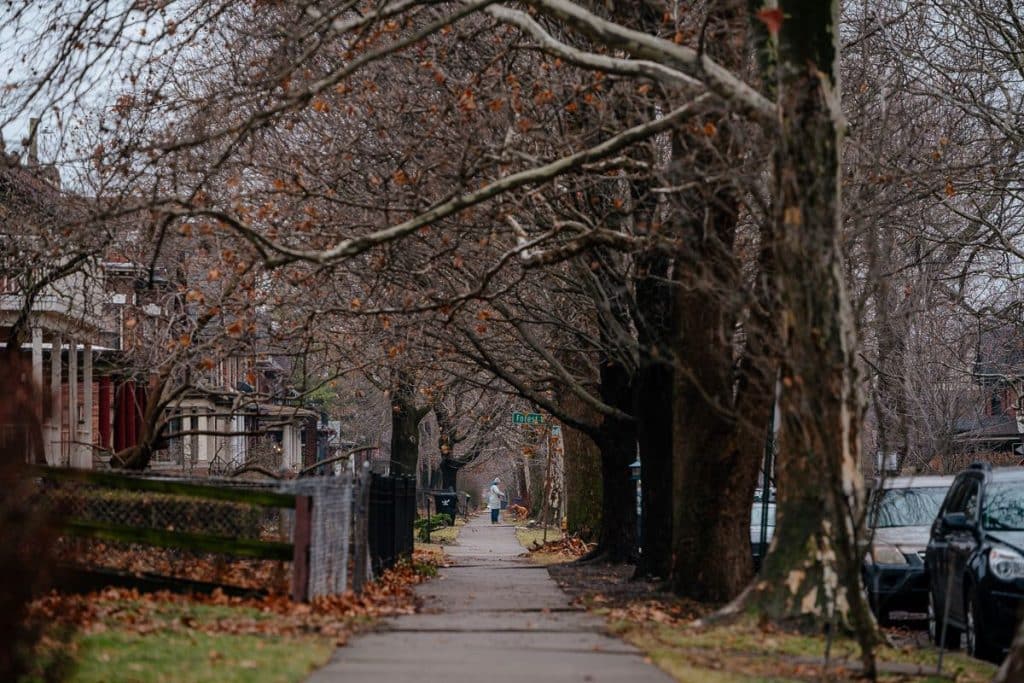
Woodbridge neighborhood collects oral histories: ‘People outside of Detroit really thought that where we lived was just a wasteland.‘
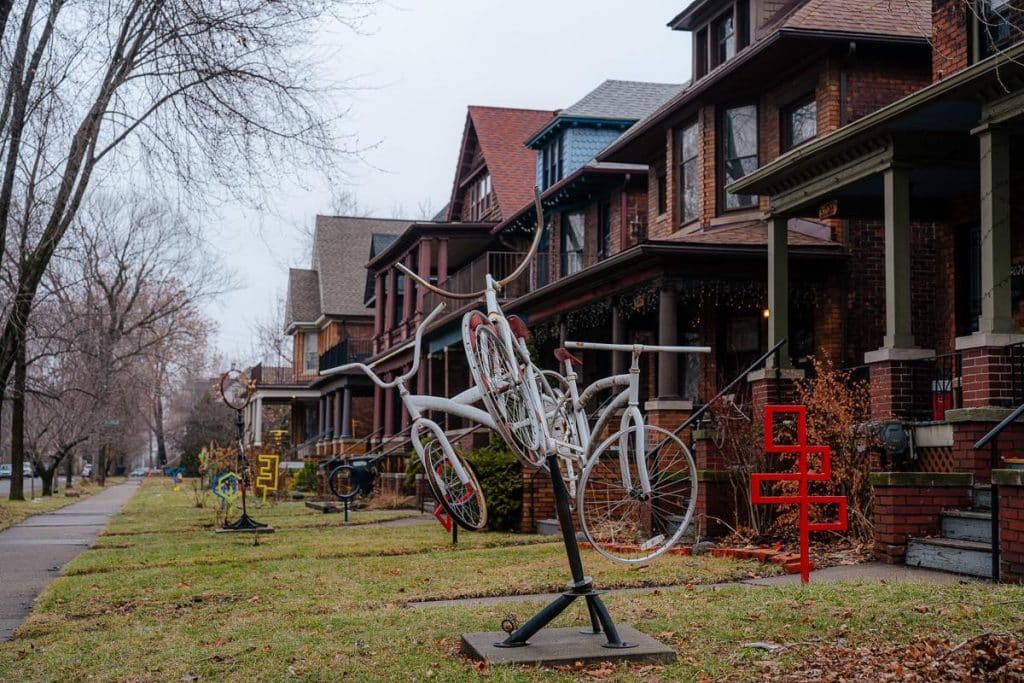
Jai Singletary, executive director of Woodbridge Neighborhood Development, says that Detroit’s Woodbridge neighborhood makes an interesting triangle – a 2.6-square-mile pizza slice just west of Midtown.
Its borders are I-94 to the north, Lodge Freeway to the east, MLK Blvd. to the south and Grand River Ave. to the west.
But what really makes up the neighborhood are its residents and their history, says Singletary: “The neighborhoods we live in are more than the spaces we occupy. The people and the spaces and the buildings – they all tell stories [about] the past or where we’re going in the future.”
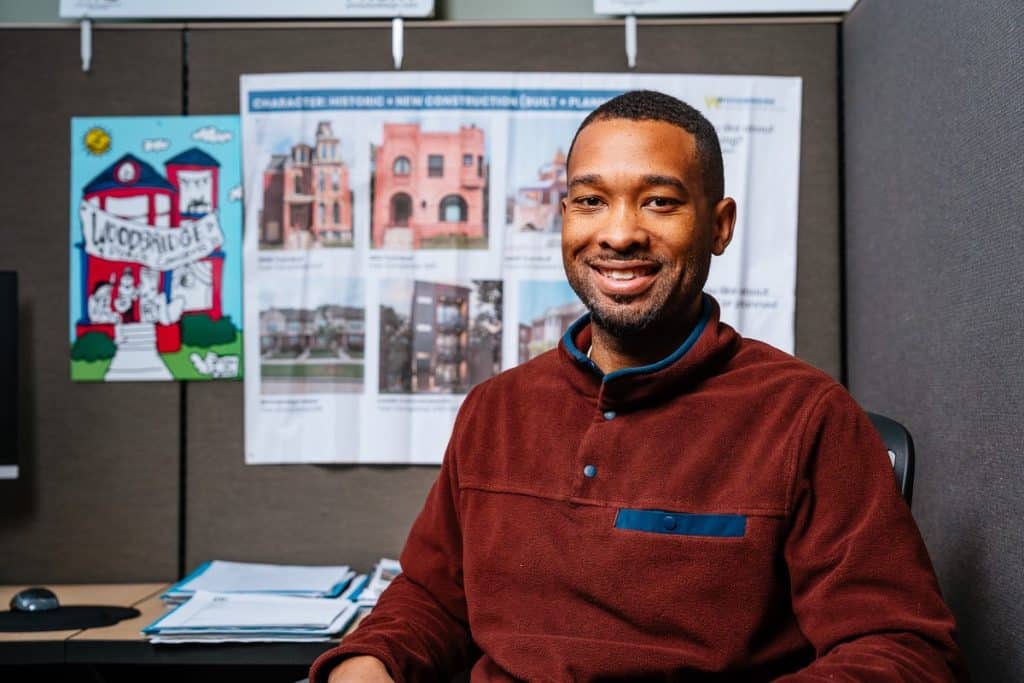
Singletary began at Woodbridge just eight months ago, but an oral history project aimed to preserve stories of long-time residents began in 2024 (with a few conducted earlier); it was the brainchild of then resident Richard Bachmann, a PhD student in the history department at the University of Michigan.
Finding the things we can no longer see
The idea behind the Woodbridge Oral History Archive was that former residents and current residents tell the story of the neighborhood through their own experiences.
“As in a lot of places in Detroit, I think there are things that you can no longer see,” says Bachmann. “In the neighborhood, oftentimes the places that you can see from the outside might not necessarily be the places that are most valuable to the people who live there.”
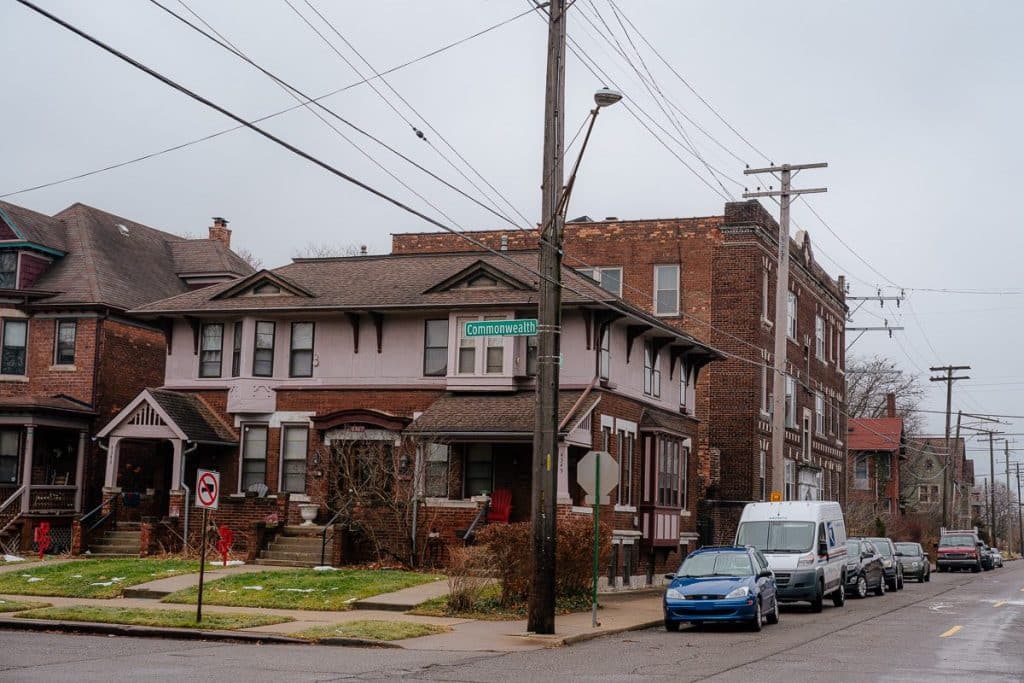
Bachmann wanted to find out about the neighborhood’s past – what it was like decades ago, what changes occurred, and who maintained Woodbridge through the rough stretches. He says in the 1960s and 1970s it was considered part of the inner city and was threatened by urban renewal projects.
It was a different place with different struggles than it is today. Over the past couple of decades, Woodbridge has become a trendy place to live, attracting hipsters who care about the city and want to pour their hearts and souls into renovating beautiful old homes that need some TLC.
During the project, Bachmann learned about people’s resilience – people who were “creative and who made sure that places are not falling apart if the bigger actors have sort of decided that that might be okay.”
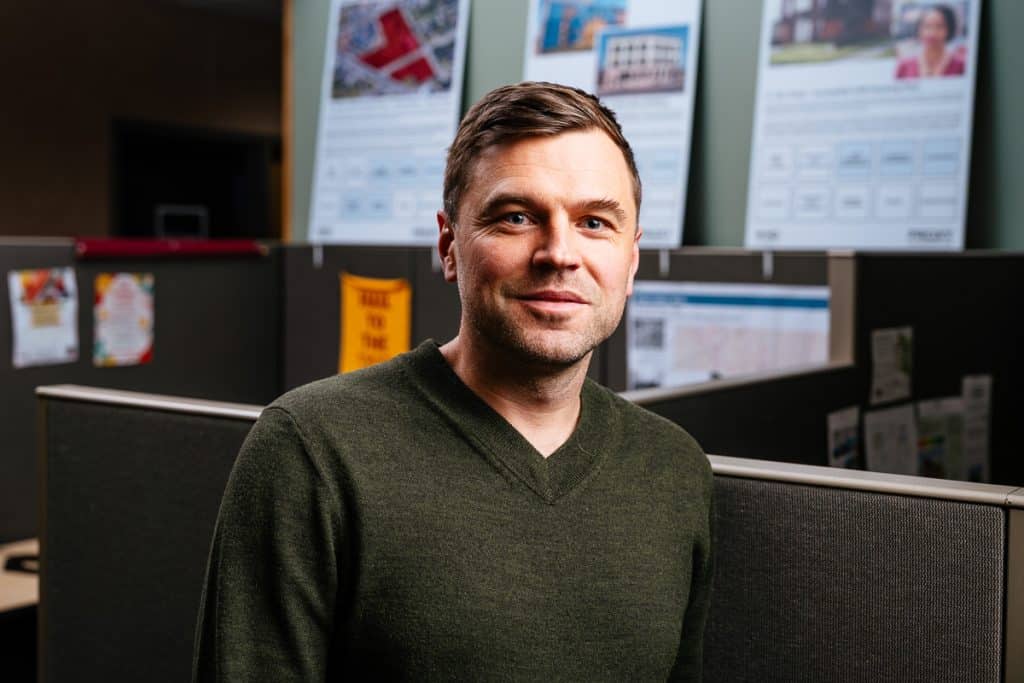
Before he launched the project, Bachmann wanted to make sure people in Woodbridge were interested in telling their stories. He partnered with Woodbridge Neighborhood Development on the project, starting with a community town halls to present the idea and get feedback on whether it would be meaningful and what folks wanted to talk about. Project presentations and senior luncheons were part of the mix.
Those gatherings were a place where community building could happen, which was important to Bachmann. “Not just amongst the old timers, but also residents who recently moved into the neighborhood” – like Wayne State students, younger families, and others.
Gaging interest and comfort with storytelling
Bachmann learned that long-time residents and former residents were very much willing to help preserve Woodbridge’s history through recording narratives.
He says, “I see it as a way for them to communicate their relationship to the place, their contribution to this place, to the changes, to its preservation as a neighborhood, to remember people who are no longer with us.”
But he also realized that not everyone is a gifted storyteller, and sticking a microphone in someone’s face can be intimidating. Bachmann worked with the Secret Society of Twisted Storytellers to conduct a storyteller training, which helped build comfort and encourage residents thinking about the types of stories they might want to tell.
Seeing the extraordinary in the ordinary
While those interviewed were seemingly ordinary people with ordinary lives, through their stories, Bachmann realized they were not.
He learned about folks setting up a 40-member babysitting co-op to make sure in a city where childcare was hard to obtain that neighborhood children would be cared for. He was equally impressed by people who organized against efforts to demolish part of the neighborhood from being removed and replaced – and by residents organizing a baseball league and theater group.
He recorded simple moments of friendship as well, of neighbors hanging out enjoying a park or empty lot. “Today, you wouldn’t even think that this was such a place of significance and a place of joy.”
Many people in their interviews speak of the diversity of the neighborhood – Black and white; low-income, working class families; Wayne State students; people who immigrated from the south for jobs; activists; and others, both young and old. What also shines through is a sense that people accepted and respected the differences.
That respect still exists today, says Singletary: “I think folks do a very good job of looking out for one another and informing one another. I don’t want to say more than any other neighborhood because I think most neighborhoods will do it in their own way, but I will say it’s something that is certainly elevated in this community.”
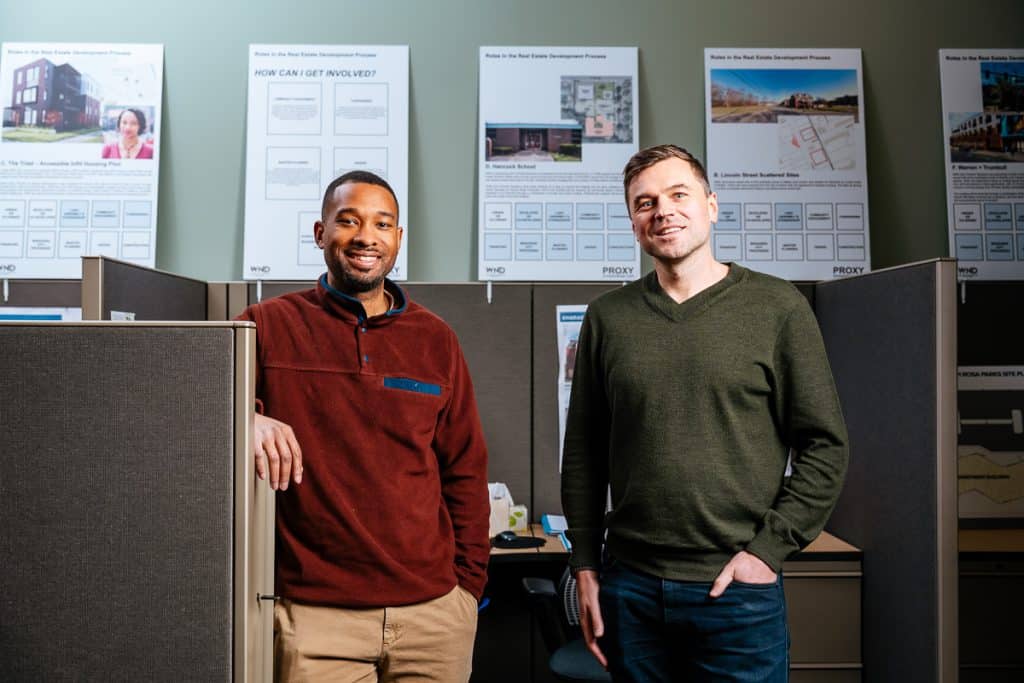
Over the course of two years, Bachmann and the executive director at the time of Woodbridge Neighborhood Development, Angie Gaabo, interviewed 25 people, and condensed sections of those interviews into two- to three-minute video collections. He says that long-time residents oftentimes thought they had nothing interesting to say and that they just lived their lives.
Bachmann says that is simply “not true.”
Resilient Neighborhoods is a reporting and engagement series examining how Detroit residents and community development organizations work together to strengthen local neighborhoods. It’s made possible with funding from The Kresge Foundation.
Excerpts from the Archives
Sheree Walton
Sheree Walton is a life-long Detroiter. She was born in 1955 and grew up mostly in what residents called “The Hole,” an area in the western part of Woodbridge.
“[For] residents who lived there, we called it ‘The Hole.’ It was a mixture of industrial and residential. When I lived there, A&P grocery store chain, which was very big, they had their bakery over there. And there was the Big Boy potato chip factory on 14th [Street], and Goodwill industries and, you know, schools and Wayne State. And so you had a mixture of poor families and working families.”
Mike Pardy
Mike Pardy was born in 1951 and mostly grew up in Woodbridge. He lived in the neighborhood from 1961 to 1975 when he moved closer to Wayne State campus. He currently lives in New York City.
“It’s just a wonderful neighborhood. I really am a better person, a more well-rounded person for having lived there and having lived there really informed me socially in my politics and in my outlook, in the way that I saw that, by dint of circumstance or political policy, how people were sort of disenfranchised, or not able to take part in any kind of real economic prosperity. And how people outside of Detroit, and in the suburbs really thought that where we lived was just a wasteland, and that nobody growing there could amount to anything, or live in anything but a hovel.
“It’s a very diverse neighborhood, and it always has been. Although they called it the slums and the inner city, and relatives of ours thought that my folks were condemning us to a life of drugs and degradation; [for] the kids, that didn’t happen. They’re just people like everybody else trying to make the best of their lives and a lot of great, great people. I’m a better person for having grown up in that neighborhood. Because I saw a lot of people were well off, not well off, tough, not so tough. I saw a whole range of people living in all kinds of situations. It’s really, it’s a really very, very vibrant community.”
Larry Johns
Larry Johns moved with his family to the Trumbull-Forest area from Alabama in the early 1960s. He grew up in a part of Woodbridge that was destroyed and redeveloped during the late 1970s as part of University City II, an “urban renewal” project by the City of Detroit.
“We lived there during the ‘67 riots and right across Lincoln Street was a row of houses and just behind that was some warehousing. That’s where J. L. Hudson used to store their goods, back behind there. When we lived there that’s when the National Guard came down the street and they were going into people’s homes trying to recoup things that were looted out of the warehouse.
“We sat on the porch and watched that for three or four days. The firemen were always putting out a fire. I remember firemen – I don’t know how it came about – when they were out there constantly battling fires and stuff. So, my mom [Betsie Johns] started cooking breakfast for ‘em, the firemen. They came in, they would eat breakfast, and she wouldn’t take no money. They would leave a dollar or two under the plates and things like that.”
Author

Related Articles
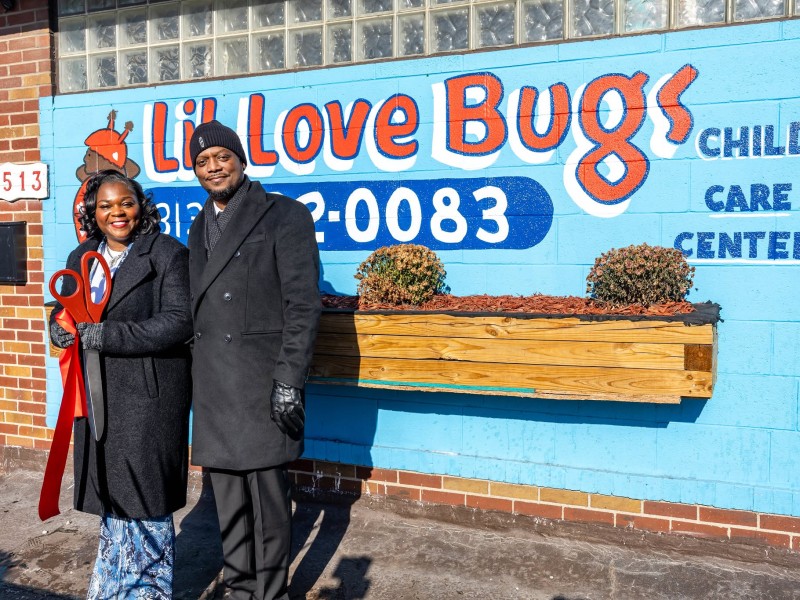
CDFIs investments in childcare allows daycares like Detroit’s Lil Love Bugs to further invest in children’s futures
Childcare is not a family issue, but a workforce issue. Members of the MI CDFI Coalition showcase how investing in quality, affordable childcare and early childhood education positively impacts the entire community.

One Detroit Credit Union brings two new CDFI branches to serve the underserved, unbanked communities
In an effort to serve the underserved, One Detroit Credit Union is expanding its reach with two new branches, both in shuttered former financial institutions. In doubling-down on their commitment to provide more than banking to Metro Detroiters — these branches offer the community products, services and resources for financial health and wealth building.
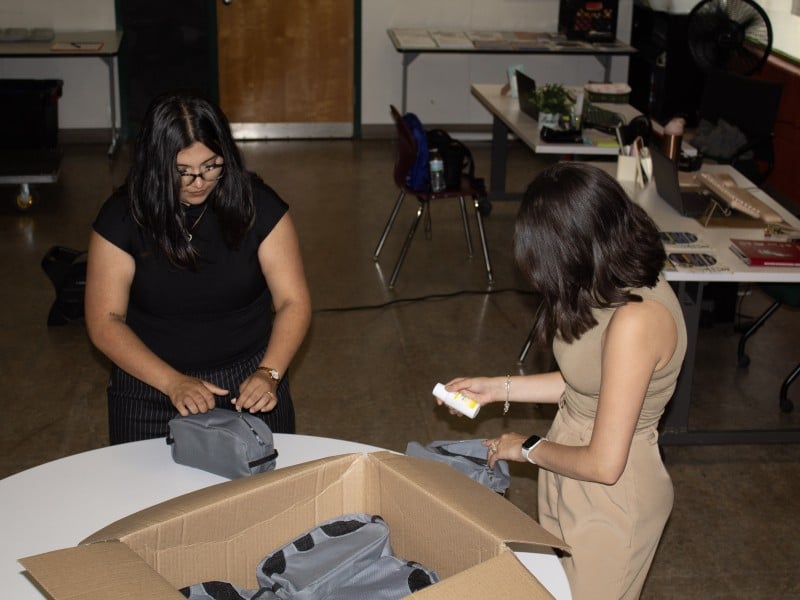
Returning Home With a Purpose: Western Alumni Are Breaking Barriers for Detroit Families
From overcoming barriers to giving back, two DPSCD alumni are helping Detroit families navigate life’s challenges through neighborhood health hubs that provide resources, guidance, and hope for a brighter future.