| Follow Us:
Overhead view of the new Cultural Living Room at the DIA - Photo by Marvin Shaouni
Overhead view of the new Cultural Living Room at the DIA - Photo by Marvin Shaouni | Show Photo

Detroit Development News

1962 Articles | Page: | Show All

The first new major development on the Avenue of Fashion will include a restaurant, yoga studio

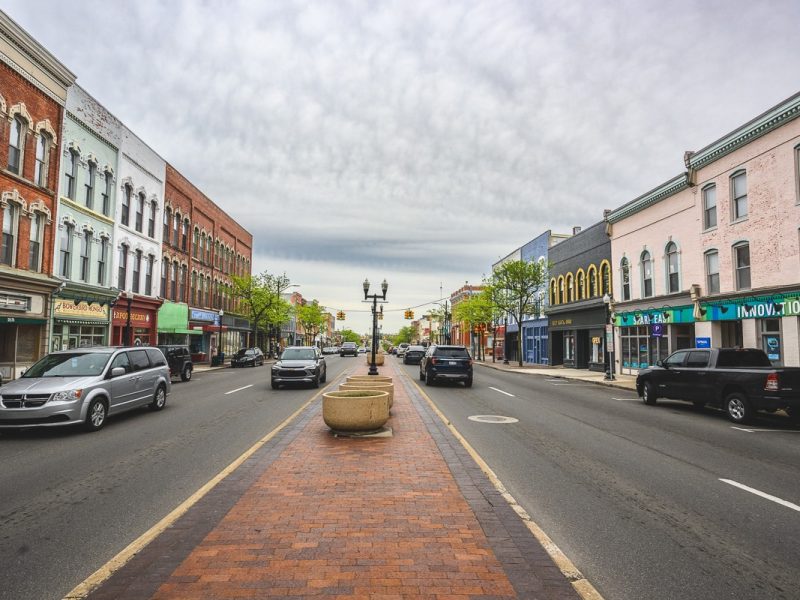
With $1.7 million in beautification and streetscape upgrade investments on the way and a concentrated effort by the Detroit Economic Growth Corporation to grow this district's retail presence, the Avenue of Fashion is poised to regain its former glory as Detroit's premiere shopping district.
 
There is one large-scale development project that has already captured the attention of residents in neighboring Green Acres, Sherwood Forest, University Commons, and Palmer Woods – all safe, vibrant communities full of people who have lived there for decades and want to see retail growth in their neighborhoods. This project is located at 19344 Livernois, just north of Seven Mile. and is overseen by Detroit-based designer and builder Chad Dickinson.
 
As a designer and builder, Dickinson is specifically interested in sustainability, process, and community. He has built world-class recording studios in Nashville, has done a variety of home design work and custom furniture from reclaimed materials (including all the furniture in Green Garage), and is currently doing major renovation work at Envirosolids waste treatment and recycling facility in Dearborn. His recently-established real estate development company I'm Here is the developer of the 10,000 square foot building at 19344 Livernois (formerly the Hunter's Supper Club). He has a specific vision for the space and is willing to take the time and the money to do it the right way.
 
"Detroit has a unique opportunity to create a new model of urban revitalization that works with the existing community," he says, noting how other examples of urban revitalization he has seen across the country have meant pushing out existing residents and businesses (in other words, the dreaded "gentrification," something Detroiters – whether they agree if it is or is not currently happening – seem to be in agreement that they don't want to happen). Dickinson, a Green Acres resident himself, wants to involve the community in his project, to find out what they want to see there, what their needs are, and how to best serve them. He nods to businesses that have been on the Avenue for 30 years and residents that have lived there their whole lives and wants to work with them, not despite them.
 
His vision for the massive property, which is split into several distinct spaces, is to be a gathering place for the community offering a number of different social and lifestyle experiences. The U-shaped building wraps around a large courtyard, which will be the centerpiece of the property and the main entry point. Upstairs there will be a reading area and a yoga studio (Dickinson is a long-time yoga practitioner and wants this to be a space that also invites community interaction). Downstairs will be a café/restaurant and a high-end retail store that will specialize in footwear (he is also a self-professed shoe addict).
 
The building that will be home to the restaurant dates back 100-150 years. Dickinson and his team believe it was the barn of German immigrant Anton Grix. The Bavarian-inspired building retains its original wooden beams and massive stone fireplace, all of which will be salvaged and restored during the renovation. The second building that is connected to it, home to the yoga studio and retail store, was built in the 1950s.
 
The project will be an expensive one but Dickinson says he will spare no expense to do it well. He repeats several times, "It's not about the money." Instead, it's about serving the community well.
 
The work will be completed in phases. The courtyard will open this summer as a grand unveiling of the project as a whole. There will be events programmed to activate the space and build community excitement. Dickinson says the next space to open will be the yoga studio later this year. The café and restaurant will likely be last, and Dickinson estimates the completion of that portion is at least two years out. But he's in no hurry, and is set on seeing the project through, even if it's all through personal investment.
 
As the developer, Dickinson is not trying to open and operate these businesses himself. He is looking to partner with aspiring business owners who are equally as passionate about serving the community in a thoughtful, respectful, sustainable way and who will in turn have the full support of the DEGC, the University Commons Business District, and other business development organizations.
 
Source: Chad Dickinson, designer and builder
Writer: Nicole Rupersburg

Got a Development News story to share? Email Nicole here.

Downtown Detroit Bike Shop now open in Eastern Market

Detroit has a new bike shop! Sort of.
 
The Downtown Detroit Bike Shop is open now through September at 1420 Fisher Freeway in Eastern Market. It is a pop-up concept that has the potential to become permanent if business is good over the next few months.
 
Owner Jon Hughes also owns the Downtown Ferndale Bike Shop, now in its fourth year, and was busy earlier this year trying to coordinate the first-ever Gran Fondo mass cycling event down the Woodward Corridor. While the ride was ultimately not approved by all of the Corridor communities, Hughes is still organizing an informal ride for Sunday, June 30 at 8 a.m. starting at Rivard Plaza and going up Woodward to the Pontiac Loop and back again.
 
"I figured I haven't been stretched out enough, so why not open a shop in Eastern Market?" Hughes says. He has wanted to open a store in Detroit ever since he first opened his store in Ferndale.
 
When a friend looking to open a restaurant found this space in Eastern Market, the cost of a restaurant build-out would have been too expensive … but it was perfect for what Hughes needed. "For him it wasn't going to work, but I just have to put hooks on the wall." The space was previously an art gallery but had been empty for four years. Though Hughes was planning on opening a Detroit location full-time next year, when this space fell into his lap he decided to test it out. He signed the lease two weeks ago and started moving in inventory.
 
Downtown Detroit Bike Shop has about 200 bikes in stock along with tons of accessories. It is an extension of the Ferndale store, selling both new and used bikes and offering full repair services. At about 2,800 square feet, the Detroit store is nearly three times as large as the Ferndale store. Hughes will have limited hours on Tuesday, Thursday, Friday and Saturday to start, in the hopes that business will grow and he can hire employees to be there seven days a week. He also wants to organize some rides through the store, which is conveniently located right near the Dequindre Cut Greenway north entrance.
 
A previous pop-up last year inside Compuware was unsuccessful due to lack of visibility, but Hughes hopes for a better response this time – ideally, he'd like to keep the space when September rolls around.
 
Source: Jon Hughes, owner of Downtown Detroit Bike Shop
Writer: Nicole Rupersburg

Got a Development News story to share? Email Nicole here.

Triton Properties unveils a brand-new look for the historic Alden Towers

On June 13, Triton Properties unveiled the new look of the historic Alden Towers apartment buildings located on East Jefferson in Detroit's Gold Coast neighborhood.
 
The Towers, also known as Alden Park Manor, were built in 1923 and designed by architect Edwin Rorke. Despite being on the National Register of Historic Places, the four towers had fallen into a state of disrepair in recent years. Denver-based Triton Properties has been working to restore this property to its former grandeur with help from Detroit's Kraemer Design Group.
 
Triton specializes in the renovation and rehabilitation of historic apartment buildings and has been doing that kind of work in Denver for years. They started investing in Detroit in 2009 and were looking for a big project in a great area that was more historic. They bought the Alden Towers out of foreclosure for $2 million in August 2012.
 
"These buildings are impossible to replicate," says Luke Davis, Director of Real Estate for Triton Properties. "The charm, the character, the quality … they're an easy sell once you get them cleaned up because people love it and love to be in it."
 
They're about one-third of the way completed with their renovation of Alden Towers. The common areas are mostly complete, including a brand-new grand lobby with a large fireplace as the focal point, a new laundry facility with stainless steel high-efficiency washers and dryers, and a new fitness center with all-new equipment and flatscreen TVs. The entire building is outfitted with free Wi-Fi. The grand lobby, designed with assistance from Sharon Carlile of Royal Oak's Italmoda, will mimic the lobby of a modern boutique hotel and will be a place for residents and visitors to congregate.

Everything is getting upgraded, and they are also doing a major renovation to the property's riverfront, which will begin in the next month. Renovation of the 382 residential units is ongoing while residents still live in the buildings; as leases come up for renewal, some choose to leave (based on reassessed qualification) and others move into newly-renovated units. 72 units are currently occupied. Davis estimates that the $5 million project will be complete in one year.

Units range from one-bed/one-bath to two-bed/two-bath, and run $649-1,134 per month (broken down per unit, this is about $1 per square foot). Triton is refurbishing as much of the original hardwood floors, moldings, bathroom tile, and built-ins as possible. All units will have state-of-the-art energy-efficient appliances and new cabinets, countertops, fixtures and faucets, ceiling fans and blinds. Triton also plans to offer a concierge service in partnership with local businesses for such things as dry cleaning, shoe repair, and grocery delivery.
 
Triton has more plans in the works for Detroit, specifically in the Gold Coast and other East Jefferson neighborhoods. Davis says that Triton was drawn to this area because of its situation on the Detroit River and proximity to other beautiful historic neighborhoods like the Villages to the north.
 
Source: Luke Davis, Director of Real Estate for Triton Properties
Writer: Nicole Rupersburg

Got a Development News story to share? Email Nicole here.

Coffee and (___) pops up for round two in Jefferson Chalmers

You might remember Coffee and (___) from its fall pop-up in West Village. Pastry Chef Angela Foster is back again with another pop-up, this time at June on Jefferson in the Jefferson-Chalmers commercial district through July 9.
 
Debuting last weekend during Jazzin' on Jefferson, Coffee and (___) was an immediate hit with the curious crowds. The impressive interior, featuring tables made of reclaimed wood and other salvaged and repurposed materials, was designed by volunteer architects from the American Institute of Architects (AIA) Urban Priorities Committee in partnership with the Jefferson East Business Association (JEBA). (This place will give some permanent storefronts pop-up envy.)
 
After building a name for herself and her brand during the three-month pop-up and through her involvement with groups like FoodLab, Foster was able to become totally self-employed. "I hate doing the same thing every day," she says, referring to what she feels is the monotony of the typical pastry chef job. Which is why she chose the name Coffee and (___), and bakes something different every single day. "The whole idea is to do something different every day and keep it exciting (for me and for customers)."
 
She had no intention of doing a second pop-up until she was approached by JEBA. Though she is hesitant to commit to full-fledged business ownership herself – "(We) proved (a bakery and café) can work (in West Village), but I don't know if I'm the one who can do it " – she does enjoy serving people her pastries and getting the "immediate gratification as a pastry chef of seeing people eat and enjoy them right there."
 
Perhaps, if we're lucky, she can be convinced to stick around and keep feeding our smiling faces.
 
Foster is working with Kung-Food to host dinners every Friday evening for the duration of the pop-up, as well as St. Clair Cinema Club for movie screenings and brunch on Sundays. Coffee and (___) will be open Monday through Thursday 7:30 a.m. to 3:30 p.m., Friday 7:30 a.m. to 8 p.m., Saturday 9 a.m. to 8 p.m., and Sunday 9 a.m. to 4 p.m.
 
Source: Angela Foster, chef and owner of Coffee and (___)
Writer: Nicole Rupersburg

Got a Development News story to share? Email Nicole here.

The DIA's Cultural Living Room in the Kresge Court opens June 14

After being closed the last two months, the Kresge Court inside the Detroit Institute of the Arts is about to reopen this Friday at 10 a.m. as the Cultural Living Room.
 
The Cultural Living Room is a concept that came about through Bradford Frost, a fellow in Wayne State University's Detroit Revitalization Fellows Program and special assistant for community and economic development at the DIA who wrote the ArtPlace grant that secured the $268,500 in funding for this project.
 
"(Basically they) wanted to (figuratively) break these marble walls down and open up to the community a spot where people come to meet, have coffee, meals, work meetings, or sit and read, learn about art, and be inspired," says Patrick Thompson, whose Detroit-based design firm was selected to lead the project. "They wanted to really maximize the potential of the space."
 
The DIA wanted Kresge transformed into a comfortable and collaborative space – a well-designed, welcoming living room free to the public and open to all. Thompson describes his design as "a modern living room with a traditional English garden." There is a lot of greenery in the space and different seating groups throughout, "different vignettes and very symmetrical leading through a traditional English garden with furniture and greenery. We wanted to make it the grandest living room in Midtown."
 
There are dining tables for meetings and social gatherings that will accommodate 4-10 people, one and two person seating spaces, and areas for people to sit in a corner and read a book quietly. "The idea is there is something here for every type of experience people are looking for."
 
There will also be coffee and tea service, an elevated menu of small plates, wine and beer. Initially the Cultural Living Room will have the same hours as the museum, with the hopes of extending the hours beyond the museum's in the future.
 
Thompson's design blends the modern and the traditional, with modern pieces from designer Patricia Urquiola for Coalesse, classic mid-century modern chairs by Euro Saarinen for Knoll, and Danish designer Hans Wegner's iconic Wishbone Chair, along with traditional Chesterfield chairs and wingbacks. The selection of the furniture is also a reflection of the museum itself: these are classic pieces of design, functional art in their own respect. There is also custom woodwork carved from oak throughout the space, as well as a new audio system and new lighting.
 
All of the furniture has power outlet access for meetings and personal use. The large library tables also have built-in iPads, which have an interface that links to the museum's collection so guests can learn more about the art around them. "It's basically a humongous, beautiful hotel lobby right in the middle of DIA," Thompson says.
 
The space will still be heavily programmed with events. There is also an outdoor extension of the Cultural Living Room, a seating area on the DIA's South Lawn with large concrete community tables, that will be completed mid-August.
 
Thompson says, "This is the project of a lifetime. It is a true honor to work with the DIA."
 
Source: Patrick Thompson, owner of Patrick Thompson Design
Writer: Nicole Rupersburg

Got a Development News story to share? Email Nicole here.

June on Jefferson pops up this weekend at Jazzin' on Jefferson

Jazzin' on Jefferson started out as a very small community and placemaking event for the Jefferson-Chalmers neighborhood. Now in its 10th year, the festival has grown significantly and has become a signature annual event for the east riverfront community.
 
Last year Jazzin' on Jefferson hosted a couple of pop-up concepts as a test run to see how the retail stores might perform. The response was positive, so this year the Jefferson East Business Association (JEBA) and American Institute of Architects (AIA) Urban Priorities Committee have partnered up to work with local entrepreneurs and artists to create June on Jefferson, a month-long pop-up business series.
 
Five businesses will occupy newly-renovated storefronts in the heart of the Jefferson-Chalmers commercial district from June 14 to July 9. Indian Village-based Shelborne Development owns the previously-abandoned buildings and has "beautifully" restored them, according to Eve Doster, who handles PR for Jazzin' on Jefferson. Individual spaces were designed with help from volunteer architects from the AIA.
 
The June on Jefferson participating businesses are Myra's Sweet Tooth, which sells specialty cupcakes and ice cream and recently opened a permanent store in the area (this will be a satellite location); Goodwell's Natural Foods Market, which has a store in Midtown; River's Edge Gallery, a temporary second location of the Wyandotte-based art gallery; a Fairview Historical Society museum, located in the footprint of what was once the Fairview waterfront community; and a satellite location for D:hive, the community development center located downtown on Woodward.  
 
The pop-ups will also host event programming every weekend including art openings, film screenings, live music, and more.
 
"The ultimate goal is to have these be permanent locations," Doster says. Even if these businesses themselves don't stay, JEBA's intention is to accelerate the physical and economic revitalization of Jefferson-Chalmers by encouraging foot traffic and vetting the potential for retail growth and sustainability.   
 
Source: Eve Doster, Norwegian Blue PR
Writer: Nicole Rupersburg

Got a Development News story to share? Email Nicole here.

Just a Bit Eclectic sells vintage items, antiques and tea on Detroit's northwest side

Just a Bit Eclectic is a new store located at 19015 W. McNichols between Outer Drive and the Southfield freeway. The store is true to its name, selling a just-a-bit eclectic mix of vintage goods and antiques, and is also a tea room and café.
 
Owner Darlene Taylor jokes that she has been working on this store for "30 years or so." When she found herself about to retire, she decided it was time to open the retail store and café she had in her mind for decades.
 
"I was 18 years old drinking tea on the beach and said, 'One day I'm going to have my own store,'" she says. "I'm doing everything in here that I like. I love tea. I love antiques. I love books and handcrafted items. Everything in here is everything that I love."
 
She found the 800 square foot building on Detroit's northwest side in her price range and it was pure serendipity.
 
Just a Bit Eclectic is a consignment store, which aren't prominent in the city. "Detroit has to get used to consignment," Taylor says, noting that her customers aren't entirely familiar with the idea of second-hand "vintage" goods. "We take clothing, jewelry, art, whatever … (we) use our shop as a stage."
 
She serves teas from Detroit-based INTU Specialty Teas and serves soups from Detroit's Beautiful Soup as well as salads and sandwiches.
 
Taylor will also use her store to work with youth on employment training, teaching them a variety of skills from running a cash register to cooking to accounting in order to build their skill sets for future employment. She will give them a stipend for working and also teach them money management skills. She is currently in the process of obtaining 501c3 designation so she can work closely with youth-oriented nonprofits.
 
Source: Darlene Taylor, owner of Just a Bit Eclectic
Writer: Nicole Rupersburg

Got a Development News story to share? Email Nicole here.

SmartBuildings Detroit wrapping up three-year energy improvement initiative

SmartBuildings Detroit, a program of the Detroit Economic Development Corporation (DEGC), is wrapping up its three-year long initiative that launched in 2010 with a $10 million grant through the American Recovery and Reinvestment Act by the U.S. Department of Energy.
 
The program consisted of both a loan and grant component. The DEGC was able to allocate $8 million in incentivized energy improvement grants for commercial buildings.
 
SmartBuildings leveraged other incentives and energy optimization programs and required a 3-to-1 dollar match for up to a $100,000 grant. "We were to able to well exceed that," says Scott Veldhuis, Senior Project Manager for the Detroit Economic Growth Corporation. "For example, COBO far overleveraged our grant which allowed us to go out to smaller businesses."

Ultimately the DEGC was able to impact 84 buildings and over 15 million square feet of commercial space in the city, leveraging over $51 million in additional capital.
 
Buildings included office buildings and parking garages, multi-family homes and warehouses, small businesses and industrial projects, as well as high-visibility commercial developments like COBO Center, Shed #5 in the Eastern Market, Newberry Hall, Presbyterian Villages Rivertown Neighborhood, and the Woodward Theatre. Projects included window replacements, lighting retrofits, HVAC replacement, insulation projects, and other renovation work. Project costs ranged from as little as $2,000 to COBO's $2 million. The goal is to show a 15 percent energy savings in these buildings.
 
All funds for this program have been committed and all projects are currently underway. The DEGC must complete all projects by July 31 to receive reimbursement funds from Michigan Saves. The DEGC's next step is to look at the loan portion and how to program those dollars that are part of a loan loss reserve for energy projects.
 
Source: Scott Veldhuis, Senior Project Manager for the Detroit Economic Growth Corporation
Writer: Nicole Rupersburg

Got a Development News story to share? Email Nicole here.

Local leaders honored at second annual Regional Transit Awards dinner

With southeast Michigan's Regional Transit Authority underway and M1-Rail about to break ground, a crowd of over 150 transit advocates had considerable cause for a buoyant mood as they strolled the stately gardens and ballroom of the Grosse Pointe War Memorial at Transit Riders United's second annual Regional Transit Awards dinner on May 21st.
 
"Developing a quality regional transit system is a marathon, not a sprint," said Megan Owens, TRU's Executive Director. "It's important to pause and recognize progress, and the people who are making a difference."
 
The Citizen Activist of the Year Award went to Neil Greenburg, whose Freshwater Railway website depicts a fictional Michigan rail system. Greenberg, a self-taught professional transit cartographer and operations consultant, developed the site to garner support for transit by offering a visual experience of the possibilities. Tools to rally public support are needed now more than ever, according to Greenberg.
 
"It's too early to say 'Mission Accomplished'," he said. "We are at the beginning, not the end."
 
Michele Hodges, who until recently served as Executive Director of the Troy Chamber of Commerce, won the Corporate Transit Champion Award for engaging business, education, and labor leaders in the successful fight against former Troy mayor Janice Daniel's attempt to reject federal funding for the Troy Transit Center.
 
The Unsung Hero Award went to former legislator Marie Donigan, who worked to establish the RTA and make state laws and funding sources friendlier to transit. Donigan continues her transit advocacy work, recently helping to coordinate a 2-day Metro Detroit Transit Workshop.
 
Dennis Schornack, Senior Strategic Advisor to Governor Snyder, won Most Effective Public Servant Award for his work shepherding the RTA legislation through the political process.
 
A Transit Employee of the Year Award went to Detroit Department of Transportation bus driver Michael Childs, who was nominated by a rider for being on-time with a big, welcoming smile every day, despite an increased workload owing to recent cuts in DDOT funding and service.
 
Ann Arbor Transit Authority's new AirRide program, which now provides daily round-trip service between Ann Arbor and Detroit Metropolitan Airport, won the Exemplary Innovation Award.
 
The TRU board sprung two surprises: a Transit Opportunities Award for the entire RTA Board, and an Above and Beyond Award for Owens for her work at TRU.
 
Winners were selected by a panel of 4 judges, including Clark Harder, former legislator and Michigan Public Transit Association Executive Director, Heather Carmona, chief administrative officer of M1 Rail, Sue Zielinsli, managing director of Sustainable Mobility & Accessibility & Research & Transformation at the University of Michigan, and Polly Sedewa, transit activist and past TRU board member.

Ocelot Print Shop is a collaborative workspace and commercial screen printer and design studio

The Ocelot Print Shop at 3535 Cass Ave. in Midtown celebrated its grand opening this past weekend. Similar to a makerspace in that paid memberships fund the purchase of equipment and shared space, but also operating as a for-profit screen printing business and design studio, Ocelot is a new kind of community-minded business in Detroit.
 
Co-founders Kinga Osz-Kemp, Bayard Kurth, and Stacey Malasky envision this as both a business and something of an experiment. It is a collectively-owned business. Interested parties can purchase memberships by the month or even by the hour, which grants them access to all of the shop's equipment, including an automatic screen printing press, a dye cutter, a guillotine cutter, and eventually an "ink bank" that members can contribute money towards and share collectively for more elaborate color print jobs.
 
"The idea is to share the resources and run it so it's not a nonprofit," says Osz-Kemp. "We decided to further explore the meeting place of arts and commerce." Ocelot will offer design services and commercial screen printing. They plan to offer screen printing classes and to eventually embrace other kinds of printing, including letterpress. In the future they would like to establish a local printer's guild and partner with Detroit youth organizations to teach students print-making and offer classes to people who couldn't otherwise afford them, turning their profit to also support the community.
 
They welcome artists of all types, not just screen printers. They want to foster relationships with other Detroit artists and build a network that will facilitate design and print job opportunities – again, resource sharing, just in a different kind of way. 
 
This collective makerspace model is, Osz-Kemp says, "indicative of the times we're in: people banding together. The 'I can do it myself' mentality is no longer interesting or sustainable."
 
The shop is open for the public to browse Mondays, Wednesdays and Fridays 9 a.m. to 5 p.m. and 11 a.m. to 4 p.m. on Saturdays. Hours are extended for members' use.
 
Source: Kinga Osz-Kemp, co-founder of Ocelot Print Shop
Writer: Nicole Rupersburg

Got a Development News story to share? Email Nicole here.

D:hive accepting applications for rotating retail pop-up program Pilot starting June 6

After inviting Pot & Box to temporarily set up shop inside D:hive as a pilot to its new Pilot program, D:hive will start accepting applications on June 6 for the next pop-up retail tenant.
 
"Lisa (Waud, of Pot & Box) was part of a focus group and a test case," says April Boyle, Director of Recruitment for D:hive. D:hive wanted to see if there was a need for something like this and if people would even want it. The response was positive, and so Pilot was launched.
 
Pilot is a rotating retail pop-up project in the 375 square feet of space available inside D:hive (that was formerly the home of D:pop) on Woodward. "The whole idea came out of our BUILD class when we kept hearing over and over again that there's not a lot of move-in-ready space that's affordable," Boyle says. "I'm in love with the idea of pop-ups as a way to test ideas and see if you like doing the fantasy in your mind before investing your life savings or taking out a huge loan."
 
While BUILD alumni are certainly encouraged to apply, Pilot is open to all entrepreneurs with a service or retail concept and a savvy approach to marketing and programming to get people in the door. The space has no street presence and foot traffic is minimal, so aspiring entrepreneurs need to show how they plan to overcome that. "We're looking for detailed proposals. We want them to show they have a marketing strategy. We want them to think about numbers, like if there's inventory, and have a vision for interior design, how they are going to staff, what kind of programming they are going to have … we don't want them to fail. We want to make sure they're prepared."
 
Participants will receive two months rent-free in the space, as well as marketing and graphic design support and buildout reimbursement of the white box space of up to $500. They'll also receive event planning support and a reimbursement for an opening party.
 
The next concept will be allowed to move in on Aug. 1 with an opening date of Aug. 12. A new concept will debut quarterly.

"Our ultimate goal is to have success with four entrepreneurs that are coming in and get them into permanent spaces," Boyle says.
 
Source: April Boyle, Director of Recruitment for D:hive
Writer: Nicole Rupersburg

Got a Development News story to share? Email Nicole here.

ACC spearheading development in Chaldean Town with Penrose Village II

The Arab American and Chaldean Council, a nonprofit human service organization serving southeast Michigan, is partnering with Penrose as they build 48 new houses between Seven and Eight Mile near Woodward in an area known as Chaldean Town. They are the lead partner agency in the Penrose Village II development with other partner organizations. The homes fall under the section 8 statute, and are available to those who qualify including the homeless, those with special needs or disabilities, and domestic abuse victims.
 
This is the second stage of the ACC's and Penrose's development efforts, with third and fourth stages already planned. They previously built 36 homes in the same area. "As we're procuring properties and getting approval from the state and funding, we're buying more and more property as we go," says Bob Ghannam, Director of Special Projects for the ACC, of the ACC's and Penrose's collective efforts.
 
The ACC is the lead service agency on Penrose Village II and provides services for many of the people who qualify. They provide healthcare services and help clients find jobs. They also help transition their clients into being effective home owners. "For many of them it's their first time living in a home and being responsible," Ghannam says. "We take them through the nuances of running a household, like paying the bills on time, keeping the house clean and the landscaping (looking nice), all of the things it takes to run a house."
 
The ACC has been in the area for 15 years and in that time has committed $16 million in funds and built a four-building campus to provide a wide variety of services to their clients. They've made a transformative difference in the neighborhood, making it a safe place to walk down the street.

"To help the community we must be a part of community," Ghannam says. "Our purpose is to develop retail for the neighborhood and get (retailers) to move back and get clients to move back. We need to make it vibrant again."
 
They hope to have all of the Penrose Village II houses completed by September.
 
Source: Bob Ghannam, Director of Special Projects for the ACC
Writer: Nicole Rupersburg

Got a Development News story to share? Email Nicole here.

Cass Corridog pet supply retailer now open inside the Auburn Building

The newest tenant to open inside the Auburn Building is Cass Corridog, a retail store selling pet care and nutrition products.
 
Michelle Potas has operated Woofbridge Feed & Supply out of Canine to Five on Cass Ave. for the last two years. She will no longer be operating out of this location, instead moving everything to one place. She will also be introducing a pet bakery as part of the new store, which is why it also has a new name.
 
Potas says she outgrew her old space over a year ago, and was interested in moving in the Auburn but at the time all of the spaces were full. When space became available again she got back in touch. Cass Corridog celebrated its soft opening this past weekend.
 
Her new space gives her 800 square feet of selling and storage space, versus the 150 square feet she had at Woodbridge. This required her to have off-site storage a mile away and she was only able to carry one of each item in the store at a time. "Now I don't have to wait (until I can run to storage to replace inventory) and not be able to give customers what they need," she says.
 
Of the many changes and additions you'll see at Cass Corridog, there will be a greatly-expanded selection of cat food and supplies, some small animal and fish supplies, and natural foods. They will also be doing some events in the future, partnering with rescue groups for single-day fundraising events and also offering guided dog-walking tours.
 
Though Potas was located inside of a doggy day care facility, most of her clientele were walk-ins. (Dog-parents often being too busy dropping off or picking up their pets to do any shopping.) With the vibrant, walkable community emerging at Cass and Canfield, Potas is confident that this will be an ideal location for her.
 
Source: Michelle Potas, owner of Cass Corridog
Writer: Nicole Rupersburg

Got a Development News story to share? Email Nicole here.

Always Brewing Detroit to open permanently in Grandmont Rosedale

When Amanda Brewington was a freshman at Michigan State University, she didn't know anyone else on campus. So she started hanging out at a local coffee shop that had an open mic on Thursdays. This coffeehouse was where she met most of her college friends, many of whom she is still close with.
 
This was the impetus behind her desire to open a coffeehouse in Detroit.
 
Brewington has spent the last two years planning Always Brewing Detroit. She attended workshops, seminars, networked extensively with other business owners, and eventually enrolled in TechTown's entrepreneurial coaching program THRIVE, which provided her with a mentor to assist her in business planning and developing funding strategies.
 
Last winter, Always Brewing Detroit popped up for a month from Nov. 26 to Dec. 23 in the former neighborhood city hall in Grandmont Rosedale on Detroit's Northwest side. Brewington chose this space after spending three months looking in neighborhoods that were underserved in terms of coffeehouses and community spaces. That left out Midtown, Corktown and downtown, but opened up areas like Jefferson-Chalmers, the Avenue of Fashion, and Grandmont Rosedale – a neighborhood she was previously unfamiliar with but was immediately attracted to after being connected to Tom Godeeris, Executive Director of the Grandmont Rosedale Development Corporation.
 
Brewington needed a building that needed a minimal amount of structural repairs – a place with "a roof, parking, walls." But she also wanted to be in a community that didn't have a coffeehouse that also offered a diversity of clientele – all ages, ethnicities, with both new and long-time residents. Grandmont Rosedale boasts an 80-percent owner-occupied community of some 14,000 residents.
 
Currently a downtown resident, Brewington also was looking for a community she could settle down in over the next few years and start a family of her own. "I wanted to be somewhere I would move … where I can have a yard and a garden and be able to walk to work."
 
She found the building at 19180 Grand River Avenue and worked out a deal with the owner to allow her to host the pop-up to gauge the community's interest. The pop-up was a success, and on Feb. 1 she signed a three-year lease. Always Brewing Detroit is currently undergoing its final round of inspections and finishing renovation touches. Brewington hopes for a soft opening by the end of the month, with a grand opening in June. Always Brewing will offer a full coffee bar, espresso, teas, pastries and prepared sandwiches.  
 
For other aspiring Detroit business owners, Brewington offers this advice: "It's definitely possible. You don't have to be rich or well-connected. You just have to be persistent and patient."
 
Source: Amanda Brewington, owner of Always Brewing Detroit
Writer: Nicole Rupersburg

Got a Development News story to share? Email Nicole here.

Movement organizers reinvest into Detroit arts with CAMP Detroit

Movement, Detroit's electronic music festival happening this weekend at Hart Plaza, is about more than just the music. Movement is about creating and promoting the full Detroit city experience for tens of thousands of out-of-town guests, and that includes highlighting Detroit's tremendous creative community.
 
Sam Fotias, Director of Operations for festival producers Paxahau, says that they are always thinking of ways to create a more fully comprehensive Detroit experience and promote other Detroit subcultures at the festival every single year.
 
The arts community and the music community seem to have a natural overlap in Detroit. Exhibit openings at the Red Bull House of Art and the newly-opened Inner State Gallery attract a lot of the same audience members as Movement, and the two communities – street/pop/contemporary art and techno/electronic music – have matured in tandem over the last couple of decades.
 
CAMP (Community Arts Moving Projects) Detroit is the final evolution of several years of growing art installations and exhibits displayed at Movement since Paxahau took over in 2006. Now in its third year, CAMP Detroit brings in six teams of Detroit artists to create installations to be displayed on the festival grounds all weekend long.
 
There are certain constraints: materials used must be able to withstand the weather and the inevitable man-handling. Designs must suit the topography of Hart Plaza and not require special machinery to be transported. Teams must also be able to work within a $1,500 budget, awarded to them through Paxahau's nonprofit organization Detroit Techno Foundation in partnership with the Detroit Creative Corridor Center and, as of this year, Opportunity Detroit. But the project doesn't end there: when the festival is over, teams are challenged to find permanent homes in the city for their works, a lasting gift to the community and an arts legacy for the Detroit Techno Foundation.
 
"I know of no other festival that is doing this – commissioning pieces for the festival from local artists to be permanently displayed in the community after the festival is over," Fotias says.
 
Projects range from the crafty to large-scale steel sculptures. This year's projects include light and color sculptures and a vertical garden "bloom box."
 
Source: Sam Fotias, Director of Operations for Paxahau
Writer: Nicole Rupersburg

Got a Development News story to share? Email Nicole here.
1962 Articles | Page: | Show All
Share this page
0
Email
Print
Signup for Email Alerts